Agentic Commerce Shopping: Operational Guide for Merchant Teams
Practical guide to agentic commerce shopping: OpenAI product feeds, merchant-owned checkout, delegated payment, and the ops AI buying requires.
 Alex Turneron March 6, 2026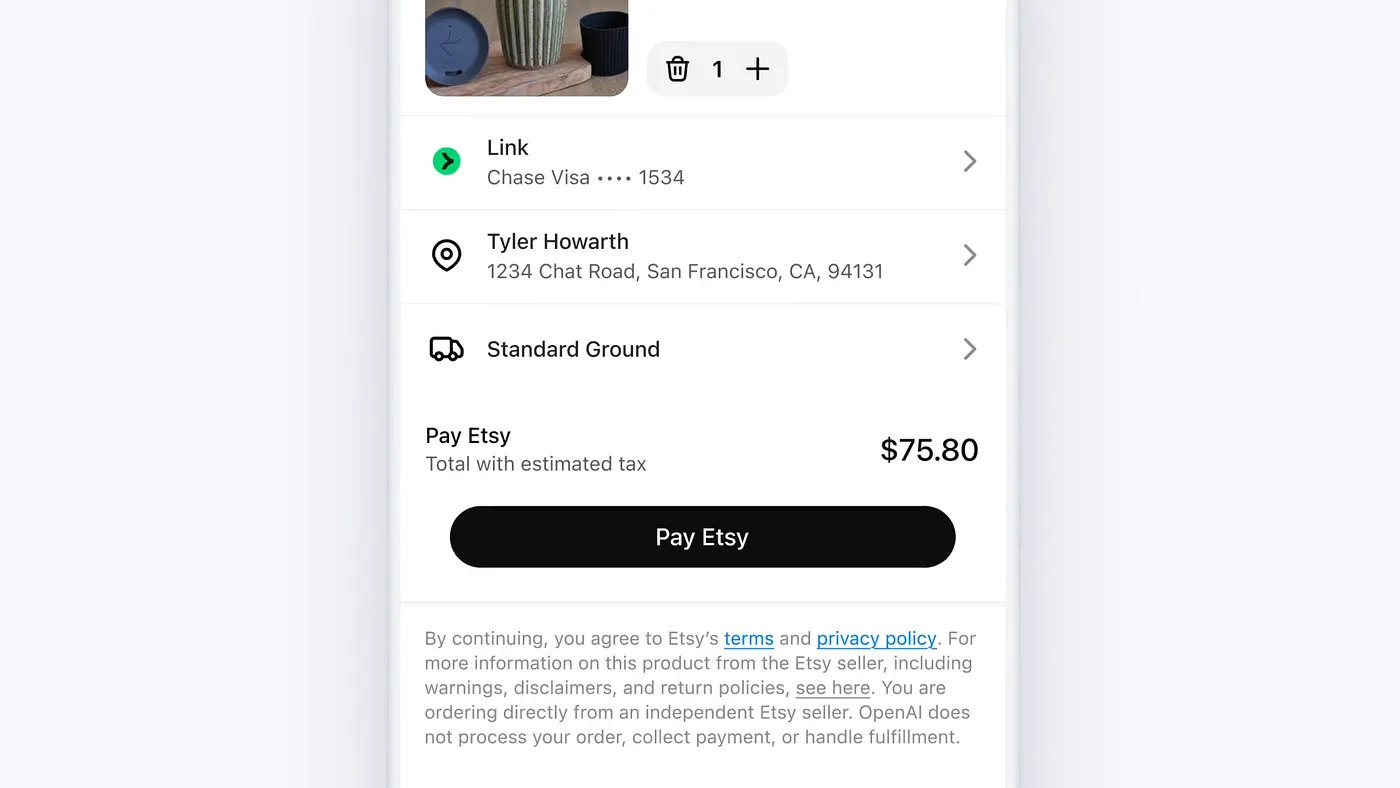
Agentic commerce shopping is what happens when an AI experience stops acting like a search box and starts acting like a buying workflow. For merchants, that means the catalog has to support discovery, the checkout stack has to support action, and the team has to operate both reliably enough that a shopper can trust the result.
That is the operational way to read OpenAI’s current commerce documentation. The headlines are interesting, but the useful lesson is simpler: agentic shopping is still a feed and workflow problem before it becomes a protocol success story.
What OpenAI’s current commerce docs say
OpenAI’s live Commerce docs describe Agentic Commerce as an open standard that lets buyers, AI agents, and businesses complete purchases together. The current documentation breaks the work into three flows:
- sharing a product feed
- handling orders and checkout
- handling payments
That structure is useful because it gives merchant teams a practical rollout model.
Related posts
- AI Shopping for Merchants: How Google, ChatGPT, and Product Feeds Are Changing Discovery
- Universal Commerce Protocol (UCP) Guide for Merchants
Flow 1: product feeds are the first gate
OpenAI’s key concepts page makes the starting point clear: merchants share structured product data so ChatGPT can surface products accurately in search and shopping experiences.
What the feed needs to do well
According to the current docs and best-practices guidance, strong feeds should deliver:
- identifiers, titles, descriptions, pricing, inventory, media, and fulfillment information
- factual descriptions rather than vague promotional filler
- seller and policy links that are durable and publicly usable
- variant structure that is explicit at the row level
- predictable snapshot publishing on a stable cadence
The operational implication is simple. If your current feed cannot support trustworthy product discovery, it is too early to think of agentic shopping as a checkout project.
Flow 2: checkout state still belongs to the merchant
One of the most important points in OpenAI’s current docs is that the checkout session may be rendered in the OpenAI user interface, but the actual checkout state and payment processing occur on the merchant’s systems.
Why that matters
It means the merchant still owns the hard parts:
- validating availability
- calculating tax and fulfillment options
- deciding whether to accept or decline the order
- keeping order state consistent
- supporting the shopper when something fails
Agentic shopping does not remove operational accountability. It raises the standard for it.
Flow 3: payments remain merchant and PSP work
OpenAI’s current payment guidance also matters for non-technical operators. The docs describe delegated payment as a way for OpenAI to securely share payment details with the merchant or its designated payment service provider. The merchant and PSP then process the payment using their own stack.
OpenAI explicitly says it is not the merchant of record in this protocol model. That single point should shape how merchants plan the work. Payment, risk, fulfillment, and support remain merchant responsibilities.
Feed operations are the real foundation
Because the docs are broken into feeds, checkout, and payments, some teams assume those are separate projects. In practice they are connected by the same operational foundation.
The shared dependencies
- one source of truth for product data
- reliable price and inventory freshness
- clear shipping and returns information
- strong seller attribution and policy URLs
- visible ownership of exceptions and declines
If any of those are weak, the whole agentic-shopping workflow becomes fragile.
Use OpenAI’s product-feed best practices as an ops checklist
OpenAI’s best-practices page is especially useful because it reads like an operator’s checklist disguised as a feed document.
Content quality
The docs recommend concise, factual copy. That matters because agentic systems need information that helps the model explain the product, not generic ecommerce slogans.
Seller and policy consistency
The guidance emphasizes durable seller attribution and policy URLs. That means merchant teams should review return-policy and seller pages as part of feed readiness, not as an afterthought.
Intentional eligibility flags
The docs describe a cautious rollout baseline where search eligibility can be enabled while checkout eligibility remains off until the team is sure the checkout path is ready. That is the right operating instinct for most merchants.
Variant and shipping discipline
The guidance around unique item IDs, shared group IDs, row-level variant modeling, and spec-compliant shipping values is exactly the kind of detail that determines whether product experiences feel reliable or confusing.
A safer rollout model for merchants
The best rollout model for agentic commerce shopping is phased.
Phase 1: discovery-ready feed
Start with the product feed. Validate the data, improve factual descriptions, and make sure the merchant and policy layer is solid.
Phase 2: checkout-ready product scope
Choose a limited product set or merchant context where shipping, returns, tax, and inventory are dependable enough for checkout exposure.
Phase 3: payment and operational monitoring
Only after the earlier layers are stable should delegated payment and more sophisticated order-state handling become part of the live operating model.
This staged approach is slower than a demo-first approach, but far more realistic for production.
What merchant teams should audit before enabling checkout
Before moving from discovery-only visibility to checkout-ready exposure, audit these questions:
- Are product details factual enough for AI-assisted comparison?
- Can the team explain what happens when price or stock changes mid-flow?
- Are shipping promises and return policies visible and accurate?
- Can support teams handle declined or exception states?
- Is there a clear owner for feed freshness and order-state monitoring?
If the answer to any of these is vague, the next step is operational cleanup, not more protocol work.
How agentic shopping connects back to Google and UCP
OpenAI’s commerce model and Google’s UCP direction are not identical, but they point to the same merchant lesson: discovery-only feed operations are no longer enough. Merchant teams need a catalog and checkout model that can support action-taking AI surfaces.
That is why Universal Commerce Protocol (UCP) Guide for Merchants belongs in the same cluster as this page. Both topics become much easier when the merchant team already runs disciplined feed-management operations.
Practical metrics for an agentic-commerce rollout
Useful metrics go beyond traffic:
- feed freshness and snapshot reliability
- percentage of products with complete seller and policy data
- acceptance rate for checkout-ready products
- support volume from exception states
- recurrence rate for feed issues that block trust
These are the metrics that tell you whether the experience is operationally real or still only a prototype.
Where to go next
If your main question is how to apply AI across the catalog without losing control, go next to AI Feed Management for Ecommerce: How to Run Smarter Shopping Feeds. If you need the wider merchant picture first, continue to AI Shopping for Merchants: How Google, ChatGPT, and Product Feeds Are Changing Discovery. If your team is comparing Google’s direction too, read Universal Commerce Protocol (UCP) Guide for Merchants and the corresponding agentic-commerce commerce page.
Agentic commerce shopping becomes practical when the merchant team can trust the product feed, explain the checkout flow, and support the order state after the AI conversation ends. That is the real implementation threshold.
Why wait? Try it free today.
Stop managing feeds manually. Start optimising with AI in 30 seconds.
- 100% free forever, no credit card required
- 1 brand, 1 feed, 100,000 products per feed
- Full AI Product Optimisation, Rule Engine, and 200+ channel exports
- Pay only for AI credits when you need them