Chaining Claude Skills for Paid Media: A Real End-to-End Campaign Workflow
Walkthrough of a single Claude session that runs from brief to launch: memory → feed audit → campaign builder → ad copy → asset pack → pre-launch QA. With the actual prompts, the actual outputs, and the time-saved math.
 Daniel Brookeson May 25, 2026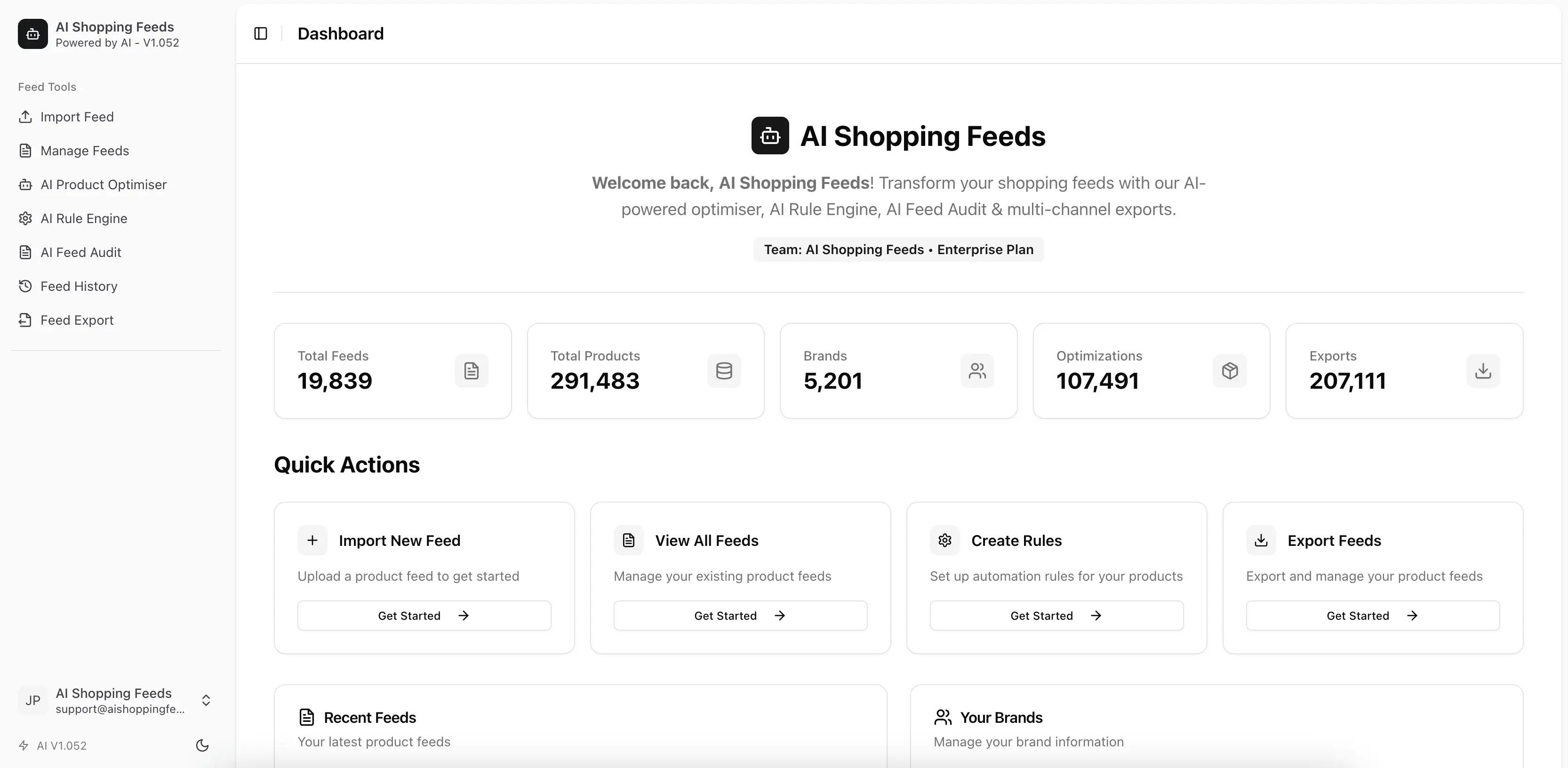
The other guides in this series describe individual Claude skills. This one describes the workflow they’re designed for: a single Claude conversation, opened on a Monday morning, that takes a brief in your inbox and gets you to live Google Ads + Meta Ads campaigns by lunch.
We’ve walked the chain on ~30 real launches at this point. This post is the walkthrough, every stage, the prompts, the outputs to expect, the gotchas, and the time-saved math.
The setup you need:
- Claude Memory configured with the five core entries (brand-voice, banned-claims, usp-stack, audience-profile, account-context)
- All 16 skills installed from the bundle
- A brief, formal or informal, doesn’t matter
Total time for a single-product launch covering Google Search + PMax + Meta ASC: ~90 minutes in Claude vs ~6–8 hours manually.
The brief we’re using
For this walkthrough, the brief:
Premium reusable water bottles. New launch, the “Trail” line, $32–$48 price point, US-only, $40 AOV, $80/day budget across Google Ads ($50) and Meta ($30 to start, ramp to $80 if early metrics hold). LP: premium-bottles.com/trail. Goal: 4x ROAS. Tracking live, pixel + CAPI healthy. Catalog connected to Meta. 412 active SKUs total, 14 in the Trail line.
A real brief. The kind that lands in your inbox on a Monday and is supposed to be live by Wednesday.
Stage 0, Memory check
Before anything else, verify Claude Memory is populated for this brand. In the Claude conversation:
Show me the current brand-voice, usp-stack, banned-claims, audience-profile, and account-context entries.
Claude returns the contents of each. If anything is stale (USPs from last quarter, no Trail line mentioned anywhere), update before running skills. The Trail line is new, so the USP stack probably needs an addendum:
Update usp-stack to add: “Trail line includes 25-year warranty (SKUs starting TRL-)” under Hero-product USPs.
30 seconds of memory hygiene. Saves three hours of “why is Claude talking about the old warranty terms?” downstream.
Stage 1, Feed sanity check
The Trail line has 14 new SKUs that need to land in Google Merchant Center and Meta Catalog before the campaigns can serve. If the feed is broken, no campaign architecture saves you.
In the Claude conversation, paste a sample of the 14 Trail SKUs:
Use
product-feed-quality-auditoron this feed sample. Target channels: Google Shopping + Meta Catalog. Vertical: outdoor / hydration. Known issues: this is a new product line, expect some missing fields.[paste 14 rows]
The auditor returns:
## Feed audit summary
- Rows audited: 14
- Critical errors: 3 (21% of rows)
- High-severity: 5 (36% of rows)
- Medium / low: 2
- Estimated disapproval risk: HIGH

### Top 3 fixes
1. 3 SKUs missing GTIN (TRL-001-OL, TRL-002-OL, TRL-003-OL, olive variants).
   Fix at source: confirm GTINs from supplier, populate before sync.
2. All 14 SKUs use generic Google Product Category "Sporting Goods >
   Outdoor Recreation". Recommend deepening to "Sporting Goods > Outdoor
   Recreation > Hydration > Bottles" (4-level GPC). Higher Shopping relevance.
3. 5 SKUs have titles > 100 characters with promotional text ("New for 2026,")
   in title, GMC policy violation. Run google-shopping-title-rewriter on these.
Two of the three Critical fixes are source fixes (need supplier GTINs, need a GPC update). The third is a title rewrite, which the next stage can handle.
Block launch until source fixes ship. If you launch on a feed with 3 Critical errors, Google de-prioritises Shopping eligibility and PMax can’t serve the 3 SKUs at all.
Time check: ~10 minutes including the auditor run and slack to operations for the source fixes.
Stage 2, Campaign blueprints
While the feed fixes are in flight, run both campaign builders in parallel:
Use
google-ads-campaign-builderfor the Trail line. LP: premium-bottles.com/trail. US-only. $50/day. Max Conv goal. $40 AOV. Conversion tracking live.
Output is a full blueprint:
- 1 Brand campaign ($10/day), keyword-themed around the brand name
- 1 Non-brand campaign ($40/day) split across 3 ad groups:
- Premium Water Bottles ($20/day)
- Trail / Hiking Bottles ($12/day)
- Stainless Steel Insulated ($8/day)
- 3 RSAs per ad group (drafted inline using
google-ads-rsa-headlinesconventions) - 4 sitelinks (Bestsellers, Reviews, Returns, Trail Collection)
- 10 callouts (Free shipping over $50, 25-year warranty, USA brand, etc.)
- 50 campaign-level negatives across 5 themes
- Pre-launch checklist
Then:
Use
meta-ads-campaign-builderfor the same brief. Catalog connected, pixel + CAPI healthy. $30/day to start, ramping to $80 if early metrics hold. Audience assets: 18k customer list, all-site retargeting 180-day, IG engagers 90-day, 25% video viewers 90-day. Creative assets: 3 UGC videos (15s), 2 brand stills, 1 founder voiceover video (45s).
Output recommends:
- Pattern A, ASC single-campaign (justified: catalog connected, ≥50 purchase events/wk on the brand account, $80/day = enough budget for ASC after ramp; existing customer cap at 25%)
- 1 ad set with all 6 creatives pooled
- Audience signals: 1% LAL of customer list + 2-5% LAL + IG engagers as observation
- 14-day learning-phase plan (days 1–4 don’t touch, days 5–7 first creative cuts, etc.)
- Pre-launch checklist (Pixel events firing, CAPI live, EMQ ≥7.0, catalog connected, dedup confirmed)
Time check: ~15 minutes for both blueprints in parallel.
Stage 3, Google Ads copy generation
The campaign builder produces a blueprint. The full ad copy needs the dedicated copy skills. For each of the 3 non-brand ad groups + the brand ad group + the PMax asset group:
For ad group “Trail / Hiking Bottles”, use
google-ads-rsa-headlines. LP: premium-bottles.com/trail. Primary keyword: “hiking water bottle”. The brand campaign uses the brand name; this ad group is non-brand.
Output: 15 headlines + 4 descriptions + pinning suggestions, char-perfect. Three minutes to review, edit one or two, paste into Google Ads Editor.
Repeat for the other ad groups. Then:
Use
pmax-asset-packfor the Trail asset group. LP same as above. 4 USPs from memory. Promo offer: free shipping over $50.
Output: full pack, 15 short HL + 5 long HL + 5 descriptions + 4 sitelinks
- 10 callouts + 8 structured snippet values + 3–5 audience signals.
Time check: ~20 minutes across Search + PMax copy.
Stage 4, Meta Ads creative
Because the Meta campaign is ASC, the right skill is the Advantage+ creative pack:
Use
meta-advantage-plus-creative-packfor the Trail launch. LP: premium-bottles.com/trail. Offer: free shipping over $50. USPs from memory. Past winners on the main brand account: STORY hooks consistently outperform PAS, BEFORE/AFTER worked well for warm audiences.
Output: 5 primary text variations using different frameworks (the skill weights STORY heavier because it was flagged as a past winner), 5 modular headlines, 3 link descriptions, 3 CTAs, audience signals, and a diversity score.
Diversity score on this run: hook diversity 5, audience coverage 4, lifecycle coverage 4. (Cold + warm well-covered; retargeting variation slightly weaker, the skill notes this and offers to rewrite if you want a retargeting-specific pack later.)
Time check: ~10 minutes including the diversity-score review.
Stage 5, Pre-launch QA
Before pasting anything live, run the QA checker across the generated copy:
Use
ad-copy-qa-checkeron the full output so far, all RSAs, the PMax pack, and the Meta creative pack. Cross-check against banned-claims from memory.
Output: a checklist of violations. Common catches:
- A headline that drifted to 31 characters during a manual edit.
- A description that says “Free shipping” without the $50 threshold.
- A Meta headline that contradicts the LP H1.
- A PMax callout that uses a banned phrase.
Each violation is flagged with the rule it broke and a suggested fix.
Time check: ~5 minutes to fix violations in-place.
Stage 6, Build and launch
Now the paste-and-verify stage. The skills’ outputs are designed for this:
- Google Ads Editor: the campaign builder blueprint pastes into a fresh campaign template. RSAs, keywords, sitelinks, callouts all map to the Editor fields directly.
- Meta Ads Manager: the ASC creative pack pastes into the creative composer. Headlines, primary texts, link descriptions, CTAs each go into their respective fields.
Pre-launch sanity checks (5 minutes):
- Conversion actions firing
- Enhanced conversions enabled (Google)
- CAPI EMQ ≥ 7.0 (Meta)
- Audience signals attached
- Budgets set correctly
- Ad schedule = 24/7 for first 14 days
Launch.
Time check: ~25 minutes for build + verification across both platforms.
Stage 7, 14-day review
You don’t touch anything for the first 14 days (Meta) or 7 days (Google Search). Then:
Use
google-ads-account-auditoron the new campaigns + the broader account. Focus on this week’s launches.
Output: prioritised punch list. Common 14-day catches:
- Brand and non-brand campaigns overlapping on some queries → recommend exact-match brand negatives in the non-brand campaign.
- One of the three non-brand ad groups under-pacing → recommend budget reweight.
- A PMax asset combination has dropped below 30% serving share → recommend
rewrite via
low-ctr-ad-rewrite.
Then:
Use
meta-ads-account-auditoron the ASC campaign and the existing retargeting campaigns. Focus on the new ASC.
Output: similar prioritised list. Common catches:
- ASC creative #3 has frequency > 4 with declining CTR → recommend
refresh via
meta-ad-teardown. - One audience signal under-delivering → recommend swap for a different LAL %.
And:
Use
search-terms-to-negativeson this Google search-terms report from the last 14 days.
Output: 30+ negatives categorised by theme.
Time check: ~30 minutes across both audits + negatives review.
The time-saved math
| Stage | Manual time | Chained skills time |
|---|---|---|
| Stage 0, Memory check | (n/a, manual workflow doesn’t have this) | 5 min |
| Stage 1, Feed audit | 60 min | 10 min |
| Stage 2, Campaign blueprints | 90 min | 15 min |
| Stage 3, Google Ads copy | 180 min | 20 min |
| Stage 4, Meta Ads creative | 150 min | 10 min |
| Stage 5, Pre-launch QA | 30 min | 5 min |
| Stage 6, Build + launch | 60 min | 25 min |
| Stage 7, 14-day review | 90 min | 30 min |
| Total | 660 min (~11 hours) | 120 min (~2 hours) |
The 5.5x speedup compounds. Across 30 launches in a year, that’s ~265 hours saved, six full work weeks. The skills-and-memory setup pays for itself before the third launch.
The bigger win, less measurable but more valuable: consistency. Across 30 manual launches, brand voice drifts. Banned claims slip through. Audit findings change based on which operator ran them. Across 30 chained-skills launches, the outputs are reproducible because the skills enforce the same rules every time.
When not to chain
A few cases where the chain isn’t the right shape:
- Heavily-creative-led campaigns (a creative director is in the driver’s seat, copy fits the visual, no template applies). The skills still help on copy variants and audit, but the campaign-builder pattern is wrong.
- Brand-defining first ads (when the brand voice itself is being decided in the ad). Memory isn’t ready yet; the chain has nothing to inherit.
- Crisis mode (an account is suspended at 11pm). Skip to
gmc-disapproval-fixerormeta-ads-account-auditordirectly, the chain is a planning workflow, not an incident-response workflow.
Otherwise, the chain works on virtually every D2C and lead-gen launch we’ve tested.
What to add when you’re ready
The chain works without any account-side integration. When you’re ready to remove the paste step, add:
- Google Ads MCP, lets Claude push the blueprint and copy directly to your Google Ads account.
- Meta Ads MCP, same for Meta. 29 tools, 10 of which are catalog ops.
- AI Shopping Feeds, applies the feed-rule fixes the auditor recommends, at scale, across every sync.
The full stack (memory + skills + MCPs + AI Shopping Feeds for the catalog layer) is what turns Claude from a copy generator into a paid- media operator that runs your account.
Start with memory. Add the skills next. Run the chain manually for a few launches to build trust. Then layer in the MCPs for the campaigns where the chain has earned the right to push live.
Why wait? Try it free today.
Stop managing feeds manually. Start optimising with AI in 30 seconds.
- Free plan, no credit card required
- 1 brand, 1 feed, 100,000 products per feed
- Full AI Product Optimisation, Rule Engine, and 200+ channel exports
- Pay only for AI credits when you need them