Meta Ads MCP for Catalog Operations: The 29-Tool Toolkit
How to use Meta's official MCP server (29 tools, 10 for catalog ops) to automate Advantage+ feed work, setup, OAuth, and the catalog tools that actually matter.
 Sara Lindbergon May 5, 2026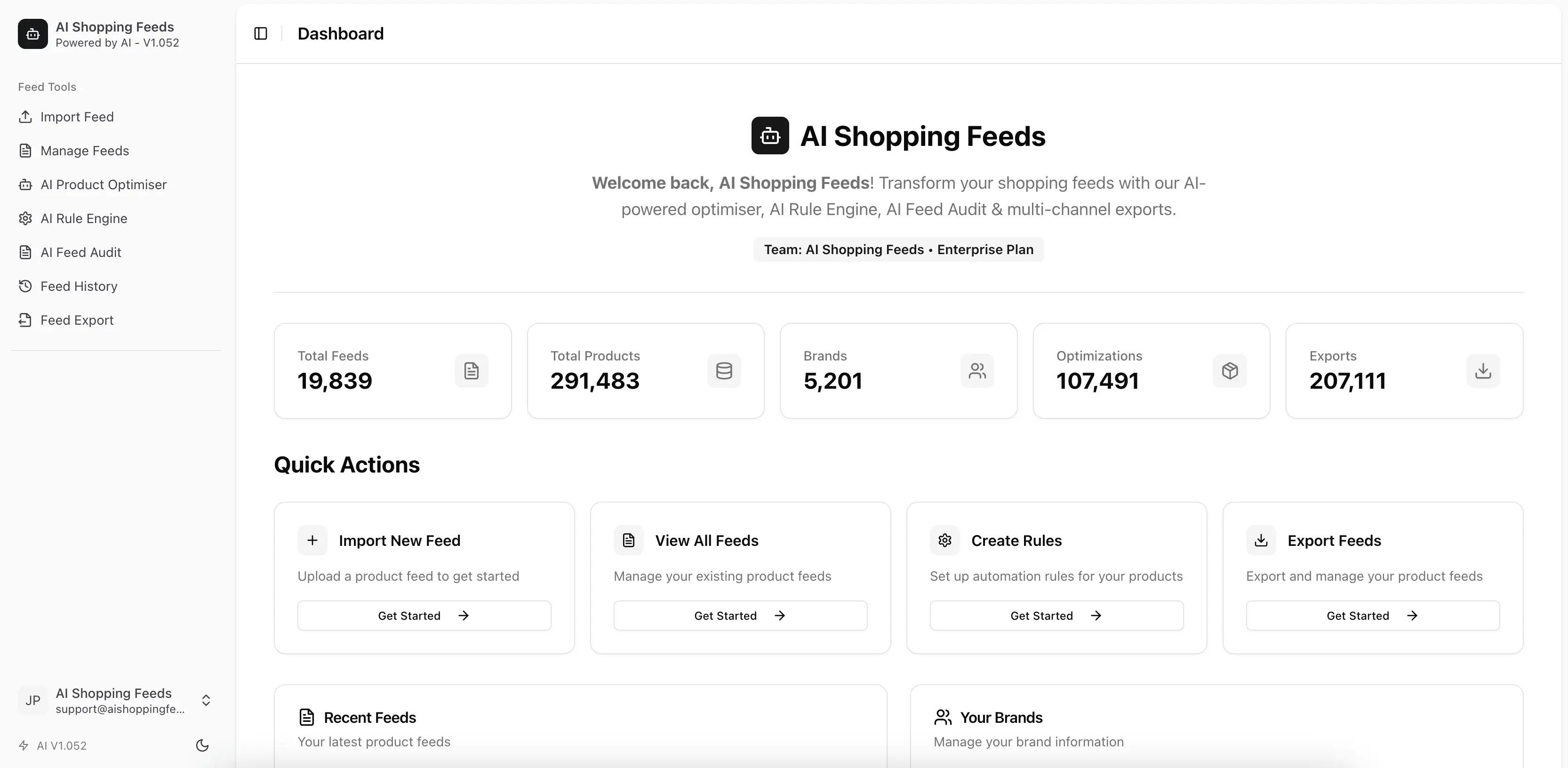
Meta’s official MCP server launched in open beta on 29 April 2026. Unlike Google’s read-only release a day earlier, Meta shipped a 29-tool toolkit with full read+write access, and ten of those tools are dedicated to catalog operations. For shopping feed teams running Advantage+ Shopping campaigns, this is the most consequential platform update of 2026.
What the official Meta Ads MCP is
The server lives at mcp.facebook.com/ads/{business_id} and is hosted by Meta directly, no self-hosting, no Docker container, no developer-token management. Authentication runs through the same Business Manager OAuth that powers production marketing API access. From a Claude or ChatGPT conversation, you authorize the MCP scope once and the LLM has access to your full ad accounts and catalogs.
The 29 tools split roughly into:
- Catalog (10), create/read/update/delete on catalogs, product sets, products, feeds, feed runs
- Campaigns (8), campaign and ad set lifecycle, budget changes, status toggles
- Audiences (5), custom audiences, lookalikes, audience overlap
- Creative (3), creative asset uploads and edits
- Reporting (3), insights queries against the standard breakdowns
The catalog cluster is the heaviest because Meta sees catalog automation as the bottleneck for Advantage+ adoption. The June 2026 Shoptalk announcement around Product Set Optimization made this explicit: SKU-level targeting needs SKU-level automation, and the MCP is how Meta wants you to do it.
The 10 catalog tools that matter
1. catalog_list and catalog_get
Returns the catalogs accessible under your Business Manager, plus per-catalog metadata (feed count, product count, last update). Use as the first call in any catalog automation conversation.
2. catalog_product_set_list, product_set_create, product_set_update, product_set_delete
Product Sets are the unit that matters for Advantage+ Product Set Optimization. The MCP lets your agent define rule-based sets (price range, custom label, in-stock, etc.) in the same conversation it’s analysing performance.
3. catalog_product_list and catalog_product_create_or_update
Per-product reads and writes. Useful for ad-hoc fixes when you don’t want to push a full feed.
4. product_feed_list, product_feed_create, product_feed_create_upload
The actual feed plumbing. product_feed_create registers a recurring URL-based feed; product_feed_create_upload handles one-off file uploads. product_feed_list returns scheduled fetch status and recent run history.
5. product_feed_run_list
Each feed has a run history (last fetch, items processed, errors). This is the call that surfaces “feed failed last night” to your agent without you opening Commerce Manager.
Setup walkthrough
Step 1: Authenticate via Business Suite
Go to business.facebook.com > Settings > AI Connectors > MCP. The screen will show a “Connect” button for each supported client (Claude Desktop, ChatGPT Custom GPTs, Cursor, others). Pick yours.
You’ll authorize the MCP scope (ads_management, business_management, catalog_management) against the Business Manager that owns your ad accounts. The OAuth scopes you grant determine which tools the MCP can call.
Step 2: Get your personalised endpoint
After authorization, Meta returns an endpoint of the form:
https://mcp.facebook.com/ads/1234567890123/sse?token=eyJ...The token is account-scoped and long-lived (Meta recommends rotating every 90 days but doesn’t expire automatically). Treat it like a production API key.
Step 3: Register with your MCP client
Claude Desktop config (claude_desktop_config.json):
{
  "mcpServers": {
    "meta-ads": {
      "url": "https://mcp.facebook.com/ads/1234567890123/sse?token=eyJ...",
      "transport": "sse"
    }
  }
}
Restart Claude. The 29 tools should appear in the connected-tools list.
Step 4: Verify with a read query
Start with catalog_list. If your Business Manager has multiple catalogs, you’ll see them all. Pick the one you care about and run product_feed_list against it to see scheduled feeds and their last run status.
Step 5: Run a low-risk write
Before automating bulk operations, validate write access:
“Create a product set in catalog 9876543210 named ‘mcp_test’ with a filter for products where price > 50.”
Confirm in Commerce Manager that the set appears. Delete it. You now know the write scope works.
Practical agent patterns
Pattern 1: Advantage+ Product Set Optimization with AI
The March 2026 Shoptalk announcement introduced SKU-level budget control via Product Sets. The MCP makes this manageable at scale:
“Pull last 14 days’ performance by product. Group by ROAS quartile. Create four Product Sets, top, upper-mid, lower-mid, bottom, and assign each to its own Advantage+ campaign with budget weighted toward the top quartile.”
The agent calls Meta’s reporting endpoints, builds the sets via product_set_create, and modifies campaign budgets via the campaigns tool cluster. Total time: one conversation. Manual equivalent: a half-day of Commerce Manager work.
Pattern 2: Catalog disapproval recovery
“List all products in catalog 9876 with availability=‘out_of_stock’ but in_stock_quantity > 0. For each, update availability to ‘in_stock’.”
catalog_product_list with a filter and catalog_product_create_or_update in a loop. The agent handles the discovery and the fix in the same turn.
Pattern 3: Feed health check
“For every catalog under business 1234, list product feeds and report any whose last run had errors or completed more than 48 hours ago.”
Three tool calls (catalog_list, product_feed_list, product_feed_run_list) and a summary. Replaces a weekly manual review.
Pairing Meta Ads MCP with a feed manager
Meta’s MCP is exceptional at managing catalog data inside Meta. It’s not a feed manager, it doesn’t transform your source catalog, it doesn’t run AI title rewrites, it doesn’t push to Google Shopping or TikTok at the same time.
The natural pairing:
- Source catalog → AI Shopping Feeds, title rewriting, image audits, category mapping, cross-channel exports
- AI Shopping Feeds → Meta via product_feed_create, schedule the URL feed in Meta pointing at your AI Shopping Feeds export
- Meta Ads MCP, your agent’s read-write window into the Meta side of the pipeline
In a Claude conversation with both MCPs registered, an agent can:
- Run a feed audit in AI Shopping Feeds, detect 200 SKUs with title quality issues
- Trigger AI title rewrites for those SKUs
- Re-export the AI Shopping Feeds feed
- Trigger a
product_feed_runon the Meta side - Verify via
product_feed_run_listthat the run completed cleanly - Update affected Advantage+ Product Sets
That’s the entire optimisation loop in one conversation, with no glue code.
Rate limits and what to watch
Meta’s Marketing API rate limits apply to the MCP. Specifically:
- Catalog batch operations, capped at 5,000 items per batch
- Read tier, ~200 calls per hour per ad account on low-volume tiers, much higher for spending-tier accounts
- Write tier, more restrictive than read; batch writes (especially
catalog_product_create_or_updateagainst thousands of products) can hit limits
The MCP doesn’t currently implement client-side caching. If you’re running multiple parallel agents against the same account, consider a small caching proxy between Claude Desktop and the MCP endpoint.
What’s likely next
Meta has flagged that the MCP will expand to cover Commerce checkout endpoints, Shops integration, and WhatsApp Business catalog operations as those products graduate from beta. The catalog cluster is the most stable; campaign-side tools are still seeing weekly tweaks.
For shopping feed teams the May 2026 release is already enough to fundamentally change the operating model. Catalog work that lived in Commerce Manager can move to agent-driven conversations, and the time-to-recover from feed problems drops from hours to minutes.
Sources
- Meta AI Connectors, official product page
- Meta Marketing API, Product Catalog reference
- Meta Advantage+ Shopping, overview
- Model Context Protocol specification
- Related read: Meta Catalog Feed for Facebook & Instagram
Why wait? Try it free today.
Stop managing feeds manually. Start optimising with AI in 30 seconds.
- Free plan, no credit card required
- 1 brand, 1 feed, 100,000 products per feed
- Full AI Product Optimisation, Rule Engine, and 200+ channel exports
- Pay only for AI credits when you need them