OpenClaw for Meta Ads: Extending Skills Beyond Google
Apply OpenClaw skills to Meta Advantage+ and DPA feed workflows: catalog automation, Product Set Optimization, and the agent prompts that move work off Commerce Manager.
 Sara Lindbergon May 22, 2026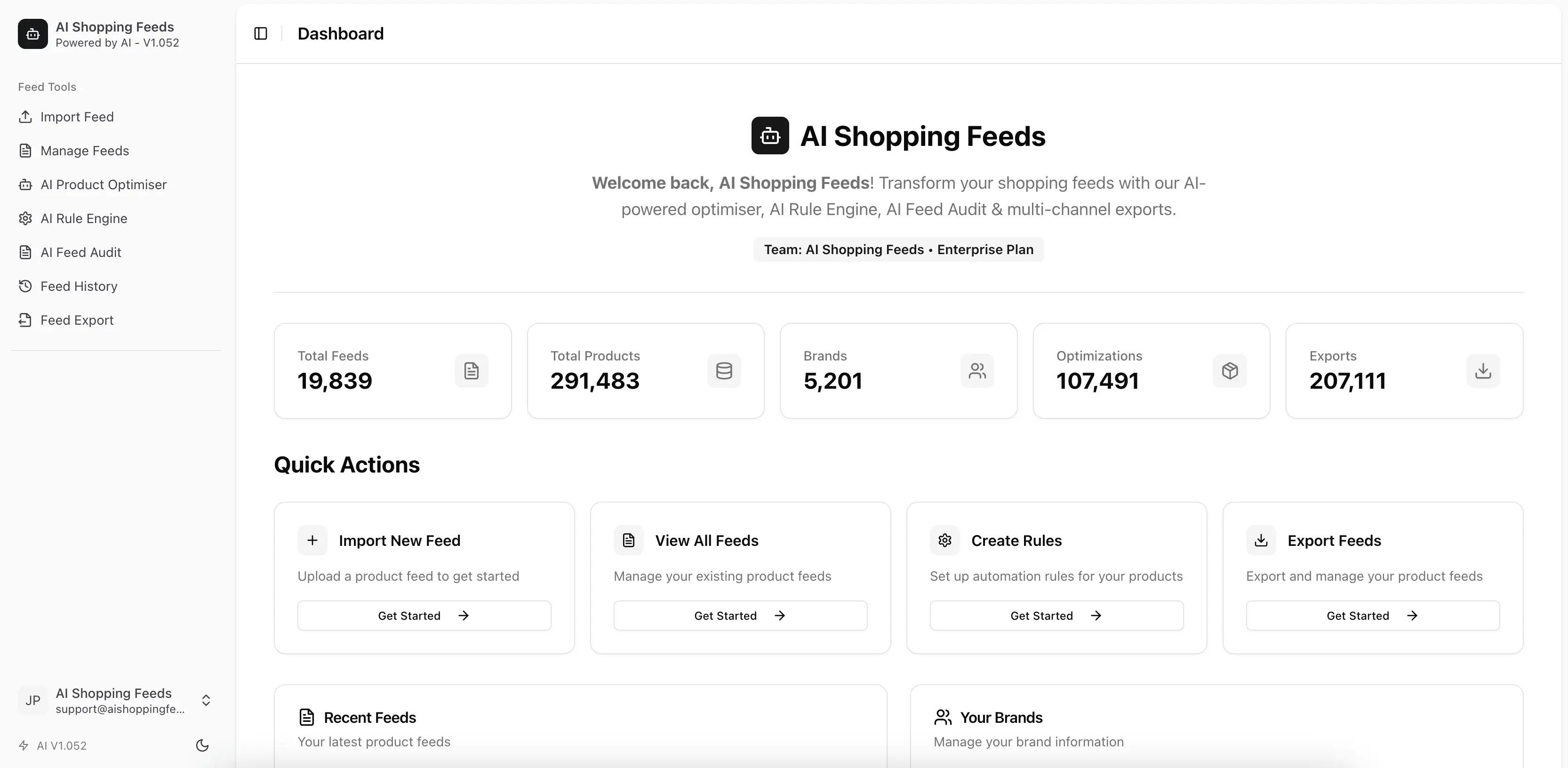
OpenClaw started life as the skill framework that gave AI agents standardized access to Google Ads workflows. With Meta’s official MCP launch in April 2026, the same agent-skill pattern extends naturally to Meta Advantage+ and Dynamic Product Ads. This is the playbook for teams already using OpenClaw on Google who want to add Meta without rebuilding their agent setup.
OpenClaw in one paragraph
OpenClaw is a skill framework. It defines a standard way to expose tools, including MCP servers, APIs, and CLIs, to AI agents like Claude, Cursor, or autonomous runtimes like Hermes. The agent discovers what tools are available, what parameters they take, and how to chain them, all without you writing integration glue. A skill is the unit of capability; an agent with multiple skills can compose them in a single conversation.
For Google Ads, the OpenClaw skill set centred on feed automation: import a product feed, optimize titles with AI, export to Google Merchant Center. With Meta’s MCP shipped, the same pattern extends to the Meta side of the same shopping-feed workflows.
Why extend OpenClaw to Meta now
Three triggers:
1. Meta’s MCP shipped with full catalog write access. Ten of Meta’s 29 MCP tools manage catalog operations. That’s enough surface for an agent to handle Product Set creation, feed registration, product writes, and feed-run management, all the work that used to require Commerce Manager.
2. Advantage+ Product Set Optimization needs continuous management. The Shoptalk 2026 announcement turned Product Sets into the primary unit of SKU-level budget control. Sets that drift in membership lose value daily. Agent-managed sets fit the rhythm better than human reviews.
3. Cross-platform agent workflows are now table stakes. Teams running Google Shopping + Meta Advantage+ + TikTok DSA need an agent that can read and write across all three. OpenClaw skills are the way to package that capability consistently.
Adding Meta Ads to your OpenClaw setup
Step 1: Install the skill
openclaw skill install meta-ads-mcpIf you’re using OpenClaw via Composio, the skill is in the Composio marketplace. Via Lobehub’s skills marketplace, search for meta-ads-mcp. The packaging may differ slightly between sources; the underlying MCP server (Meta’s hosted endpoint at mcp.facebook.com/ads) is the same.
Step 2: Authorize Meta access
openclaw auth meta-adsOpens the browser for Meta Business Manager OAuth. Required scopes: ads_management, business_management, catalog_management. Token stored in the OpenClaw keystore; the agent doesn’t see the token directly.
Step 3: Verify
openclaw skills listShould include meta-ads-mcp alongside any existing skills (Google Ads, AI Shopping Feeds, others).
Step 4: First cross-platform prompt
openclaw run "Compare the product set 'top_performers' in my Meta catalog 555666 against the same product set's underlying SKU list in AI Shopping Feeds master catalog. List discrepancies."The agent calls both skills (Meta Ads MCP for the Meta-side read, AI Shopping Feeds for the master state) and returns the diff.
Agent prompts that move work off Commerce Manager
Prompt 1: Daily Advantage+ Product Set rebalance
Pull last 14 days of Advantage+ Shopping performance grouped by product_id for advertiser 9876543210. Compute ROAS quartiles. For each of the four Product Sets (top, upper-mid, lower-mid, bottom in catalog 555666), propose membership updates so each set contains only its quartile. Write proposed changes to a review queue; do not apply.The agent: reads performance via the meta-ads-mcp report_* tools, reads current set membership via catalog_product_set_list, computes the diff, writes to your queue.
Approve in batches; a second prompt applies approved changes via product_set_update.
Prompt 2: Out-of-stock synchronization
Every 30 minutes, find SKUs marked out_of_stock in the AI Shopping Feeds master catalog. Compare to Meta catalog 555666. For any SKU where Meta still shows in_stock, call catalog_product_create_or_update to flip Meta availability to out_of_stock.Safe to auto-execute because the wrong direction (showing OOS when it’s actually in stock) recovers on the next sync, and the alternative (serving impressions for un-purchasable products) is more expensive.
Prompt 3: New-SKU onboarding to Advantage+
Daily at 09:00: identify SKUs added to AI Shopping Feeds master in the last 24 hours. Confirm they've synced to Meta catalog 555666. For each new SKU with a complete attribute set (title >= 50 chars, valid image_link, brand, price): add to Product Set 'aplus_evaluation'. For SKUs with incomplete attributes: queue to the catalog-team review list.Continuous SKU onboarding replaces the weekly batch.
Prompt 4: Catalog feed health watch
Hourly: list product feeds across all my Meta catalogs under business 1234. For any feed with last_run_status='failed', last_run_age > 24h, or error_rate > 5%, post to #ads-alerts via slack-mcp.Pure read-side monitoring. Pairs well with on-call rotation.
Prompt 5: Cross-platform price sync verification
Every 4 hours, compare current price for the top 500 SKUs (by Google Shopping spend in last 14 days) across: AI Shopping Feeds master, Google Merchant Center, Meta catalog, TikTok DSA catalog. Flag any SKU where the four sources disagree by more than 1%.Hits all four MCPs in one conversation. Catches sync gaps before Merchant Center disapprovals start.
OpenClaw vs raw MCP for Meta
You can use Meta Ads MCP directly without OpenClaw, Claude Desktop talks to the MCP endpoint over SSE, no skill framework required. The case for OpenClaw is:
Multi-skill orchestration is cleaner. OpenClaw skills can be combined, versioned, and shared. Raw MCP setups require per-platform config in your MCP client.
Auth abstraction. OpenClaw keystore handles tokens across platforms. With raw MCP, each platform’s auth lives in your MCP client config.
Hermes integration is easier. Hermes is built around the OpenClaw skill model. Raw MCPs work with Hermes too, but the registration is more verbose.
For a one-platform setup, raw MCP is fine. For two or more, OpenClaw is worth the install.
Pairing OpenClaw + Meta Ads + AI Shopping Feeds
The minimum useful OpenClaw setup for shopping-feed teams:
openclaw skill install meta-ads-mcp
openclaw skill install google-ads-mcp
openclaw skill install aishoppingfeeds
openclaw auth meta-ads
openclaw auth google-ads
openclaw auth aishoppingfeeds
With those three skills the agent can:
- Read performance from Google Ads
- Read and write catalog state in Meta
- Read and write master catalog state in AI Shopping Feeds
- Trigger feed refreshes that propagate to both Google Merchant Center and Meta
That covers ~80% of the operational catalog work for a typical DTC brand running Shopping + Advantage+.
Adding the tiktok-ads-mcp skill takes you to ~95% for brands also running TikTok DSA.
Operational discipline
The same rules that apply to Hermes with Meta apply to OpenClaw with Meta:
- High-stakes writes (Product Set membership, campaign budgets) go through a review queue, not direct execution
- Auto-execute only changes that fail safe (OOS flips, availability sync, currency normalisation)
- Set per-prompt cost ceilings so a runaway loop can’t burn budget
- Keep audit logs for at least 90 days
- Don’t auto-pause campaigns; auto-alert on anomaly instead
These aren’t unique to Meta, they’re the standard discipline for any write-capable agent setup.
What OpenClaw doesn’t change
OpenClaw doesn’t make agents better at strategy. It doesn’t replace creative direction or campaign architecture decisions. It doesn’t fix bad source data (a clean Meta catalog still requires a clean master catalog feeding it).
What it does change: the friction of getting capabilities into an agent. Adding Meta to an existing OpenClaw setup is a 5-minute job, not a multi-day integration. That changes which workflows you bother to automate.
Sources
Why wait? Try it free today.
Stop managing feeds manually. Start optimising with AI in 30 seconds.
- Free plan, no credit card required
- 1 brand, 1 feed, 100,000 products per feed
- Full AI Product Optimisation, Rule Engine, and 200+ channel exports
- Pay only for AI credits when you need them