Shopify Google & YouTube Channel vs Feed Management Apps
Compare the Shopify Google & YouTube channel with dedicated feed management apps on setup speed, catalog control, international selling, and channel reach.
 Maya Singhon March 6, 2026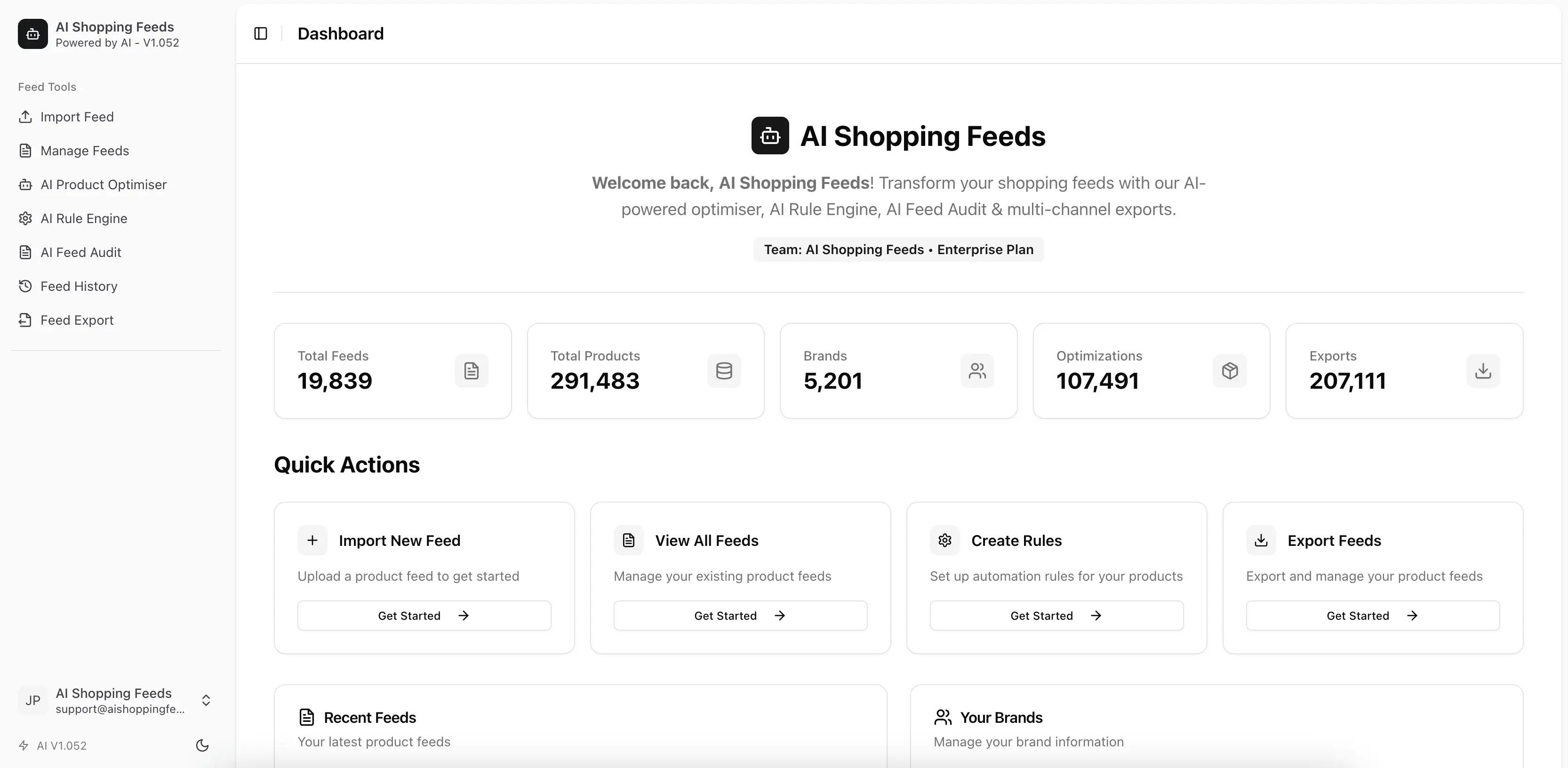
Many Shopify merchants ask the wrong first question. They ask whether they should use the Shopify Google & YouTube channel or a feed app, as if one option must be universally better. The real question is which route matches the operating complexity of the store.
For some merchants, the native Shopify setup is the right answer and anything more is overkill. For others, the native path is only the beginning and a dedicated feed-management layer becomes necessary as soon as markets, variants, multiple destinations, or recurring diagnostics enter the picture.
This guide compares the native Shopify route with dedicated feed apps in the context that actually matters: setup speed, control, international selling, multichannel growth, and the amount of feed work the team needs to govern over time.
Related posts
- Best Shopify Feed Management Apps
- How to Create a Shopify Google Shopping Feed
- AdNabu vs AI Shopping Feeds
What the Shopify Google & YouTube channel does well
The biggest advantage of the native route is simplicity. Shopify’s Google & YouTube setup guide is clear, the workflow is familiar to merchants already inside Shopify, and the requirements documentation establishes a straightforward path into Merchant Center.
For a store with a manageable catalog, one main region, and a Google-first strategy, this convenience is not a minor benefit. It is exactly what the merchant should optimize for.
- Fastest native starting point.
- Direct alignment with Shopify’s own support guidance.
- Strong fit for basic Google-focused selling and advertising.
Where the native route usually starts to feel tight
The native route becomes less comfortable when the feed itself needs governance. Merchants run into this when they want more repeatable rules, more destination-specific formatting, stronger bulk editing, better diagnostics, or more control over which products go where and why.
The moment Google stops being the only serious destination, the tradeoff changes again. A native Google workflow may still be useful, but it is no longer the whole publication strategy.
What dedicated feed apps are designed to solve
Dedicated feed apps exist because merchants eventually need a stronger control layer between Shopify and the channels where products are sold or advertised. That layer usually includes rules, exclusions, attribute mapping, localized feeds, validation, and multichannel publishing.
In Shopify’s own App Store ecosystem, this is now a large category. As of March 2026, the product-feed category listed 206 apps, which is a signal that merchants repeatedly run into needs the native path does not completely satisfy.
How the main app archetypes differ
Not every feed app should be judged the same way. Google-specialist apps and multichannel feed apps solve related but different problems.
Google-specialist apps
Simprosys and Nabu are good examples of Shopify-native tools that go deeper on Google workflows while still offering some broader support. They are ideal when Google is still the center of gravity and the merchant wants more control than the native route provides.
Broader multichannel apps
Options such as Data Feed Watch and multichannel Shopify apps give merchants stronger publication control when the business needs more than Google. These tools are more compelling once channel mix or market complexity becomes a real operational concern.
The decision usually comes down to five questions
Most merchants can make the decision much faster by answering five questions honestly.
- Is Google the only meaningful destination right now?
- How complex is the variant structure and attribute model?
- Will the store sell in multiple countries or currencies?
- Does the team need repeatable rules and audit visibility?
- Does the business want Shopify convenience only, or broader feed control too?
When to stay native
Stay with the Google & YouTube channel if the store is still operationally simple. That usually means a modest catalog, limited market complexity, and a team that can still understand the publication workflow without adding another layer.
There is no prize for adding a feed tool too early. If the native route already matches the business model, it is often the best answer.
When to move to a dedicated feed app
Move when the operational cost of staying native becomes visible. That cost shows up as recurring diagnostics, manual cleanup, growing market complexity, channel expansion, or an inability to apply changes consistently across product sets.
At that point, the question stops being whether a dedicated feed tool is technically necessary and becomes whether the business can continue absorbing the manual overhead.
Where AI Shopping Feeds fits in the comparison
AI Shopping Feeds belongs in this decision as the option for merchants who still want Shopify as the source catalog but do not want to limit the operating model to Shopify-native, App Store-only workflows. The product supports Shopify import, AI optimization, rules, audits, export history, and API or MCP workflows.
That makes it more relevant for teams that want stronger multichannel and operational control, not just a more feature-rich version of the native Google route.
A fair default recommendation
The fairest recommendation is simple. Start with the native Shopify Google & YouTube setup if the business is still simple and Google-centric. Move to a dedicated feed app when control becomes the bottleneck. Look beyond App Store-only tools when the merchant needs a stronger operating layer across channels, markets, and teams.
That sequence preserves speed early and avoids technical or operational debt later.
Operational ownership
A recurring reason feed programs drift is that nobody can answer a simple question: who owns the decision when catalog truth and channel logic conflict? The merchandising team might own titles, the operations team might own destination rules, and paid-media teams might notice issues first, but unless one person or group owns final publication quality, problems keep bouncing around the business.
That governance matters even more on Shopify because teams can change products quickly in the admin. Fast editing is good for commerce velocity, but only if the publication process has equally clear ownership and review points.
- Document the owner of every high-impact attribute and exception path.
- Decide who signs off on structural feed changes before they publish.
- Review destination diagnostics after major catalog edits, not only after media launches.
Catalog audit routine
A healthy feed process starts with a repeating audit routine. Teams should sample bestsellers, slow movers, new launches, and exception-heavy products before assuming the whole export is healthy. That sample tells you whether the workflow is robust across the catalog or only clean for the top products everyone watches.
Merchants that skip this step often spend time optimizing already-broken rows. The issue is not lack of effort. It is that effort is being spent on the wrong layer of the system.
- Sample parent and variant rows every week.
- Check image, pricing, and availability parity against live pages.
- Retire manual overrides that should now live in the source catalog.
Market and destination segmentation
Once a store sells across more than one destination, the feed should stop behaving like a single generic export. Markets, currencies, policies, promotion rules, and content expectations differ too much for one flat file to stay clean forever.
Segmentation does not always mean a separate store or a huge systems project. Often it means a better rule layer, stronger QA gates, and clearer destination-specific ownership so one market or channel no longer dictates the entire publication model.
- Separate destination logic from base catalog data.
- Use different QA checks for Google, Meta, and marketplace exports.
- Track which exceptions are market-specific and which indicate a source-data issue.
Measurement that matters
Feed teams should measure approval coverage, repeat issue rate, time-to-fix, and publish freshness before they obsess over channel expansion. Those metrics tell you whether the operating model is healthy enough to scale or whether it is barely holding together.
If those metrics are unstable, adding more destinations usually multiplies the cleanup burden rather than the revenue opportunity. Better measurement makes prioritization easier and makes tooling decisions more defensible internally.
- Track product eligibility by destination.
- Review recurring issue families rather than single incidents.
- Use feed history to understand which change caused which result.
Promotion and pricing governance
Promotions create some of the most expensive feed mistakes because they combine urgency with complexity. A discount can touch pricing, sale windows, landing-page messaging, product availability, and market logic all at once. If a feed workflow is already fragile, promotions expose the weakness immediately.
Teams should treat promotions as feed events, not only merchandising events. That means validating sale logic before launch and checking whether the published output reflects the commercial offer customers will actually see.
- Review price and sale windows before promotions go live.
- Check landing-page parity after major discount changes.
- Confirm that market-specific pricing logic still behaves as intended.
Supplier and imported data hygiene
Many Shopify catalogs inherit product data from suppliers, migrations, or historical CSV imports. Those sources can be commercially useful but structurally inconsistent. The result is a catalog that appears complete at a glance while still carrying weak identifiers, inconsistent attributes, or badly normalized text.
The feed workflow should compensate for imported-data inconsistency only temporarily. Long term, the team should either normalize the source or clearly define which transformation rules must remain in place.
- Flag imported records with low-confidence identifiers.
- Normalize attribute labels before they become channel logic.
- Track which cleanup steps belong in the source and which belong in the feed layer.
Variant governance at scale
Variant-heavy catalogs deserve their own operational discipline. The storefront can tolerate some messy parent-child structure because shoppers still browse through the product page, but feeds are less forgiving. They need consistent size, color, material, gender, compatibility, or bundle logic depending on the category.
A merchant that does not review variant structure systematically usually ends up fixing symptoms at the channel level instead of correcting the variant model once for every destination.
- Review parent-child mapping on new assortments.
- Check image coverage and attribute consistency per variant family.
- Use feed QA to catch variant gaps before they turn into repeated issue families.
Exception registers and rollback plans
High-performing feed teams do not just document the ideal workflow. They also document the known exceptions. Some products need unusual handling because of supplier limitations, legal language, bundling rules, or channel restrictions. Those exceptions should be registered explicitly rather than remembered informally.
Rollback planning matters for the same reason. If a publication change fails, the team needs a known path back to a stable state instead of improvising under pressure.
- Keep a record of exceptions that justify non-standard rules.
- Define the rollback point before large structural changes.
- Remove stale exceptions as source data improves.
Content review loops
Product copy improves fastest when feed teams treat content as an operational asset instead of a one-time merchandising task. Titles, descriptions, and category cues should be reviewed using actual destination outcomes, not just internal preference.
That is especially useful on Shopify because storefront copy often evolves for brand and conversion reasons, while off-site feeds need clearer structure and less dependence on page layout for meaning.
- Review weak-performing titles and descriptions in batches.
- Separate storefront style preferences from destination clarity requirements.
- Use AI enrichment where it speeds structured improvement, not where it hides source problems.
Team communication after publish
Publication is not the end of the workflow. The hours immediately after a significant update are when merchants learn whether the changes actually held together. Teams should know who watches diagnostics, who confirms price and stock parity, and who decides whether to pause, continue, or roll back.
A short communication loop after publish prevents small issues from becoming account-wide cleanup projects.
- Assign an owner for first-check diagnostics after major publishes.
- Confirm parity on live product pages, not only in exported files.
- Escalate recurring issue families quickly instead of treating them as isolated incidents.
Channel expansion readiness
Before adding a new destination, merchants should ask whether the existing catalog and workflow are stable enough to support one more output. A feed system that is barely stable on one major channel usually becomes expensive on three.
Expansion works best when the merchant already understands the source catalog, the rule layer, and the audit process well enough to predict where the next destination will create exceptions.
- Add destinations in stages rather than in one large burst.
- Validate one representative product set before full rollout.
- Treat expansion as a workflow test, not only a channel opportunity.
Operational ownership
A recurring reason feed programs drift is that nobody can answer a simple question: who owns the decision when catalog truth and channel logic conflict? The merchandising team might own titles, the operations team might own destination rules, and paid-media teams might notice issues first, but unless one person or group owns final publication quality, problems keep bouncing around the business.
That governance matters even more on Shopify because teams can change products quickly in the admin. Fast editing is good for commerce velocity, but only if the publication process has equally clear ownership and review points.
- Document the owner of every high-impact attribute and exception path.
- Decide who signs off on structural feed changes before they publish.
- Review destination diagnostics after major catalog edits, not only after media launches.
Catalog audit routine
A healthy feed process starts with a repeating audit routine. Teams should sample bestsellers, slow movers, new launches, and exception-heavy products before assuming the whole export is healthy. That sample tells you whether the workflow is robust across the catalog or only clean for the top products everyone watches.
Merchants that skip this step often spend time optimizing already-broken rows. The issue is not lack of effort. It is that effort is being spent on the wrong layer of the system.
- Sample parent and variant rows every week.
- Check image, pricing, and availability parity against live pages.
- Retire manual overrides that should now live in the source catalog.
Market and destination segmentation
Once a store sells across more than one destination, the feed should stop behaving like a single generic export. Markets, currencies, policies, promotion rules, and content expectations differ too much for one flat file to stay clean forever.
Segmentation does not always mean a separate store or a huge systems project. Often it means a better rule layer, stronger QA gates, and clearer destination-specific ownership so one market or channel no longer dictates the entire publication model.
- Separate destination logic from base catalog data.
- Use different QA checks for Google, Meta, and marketplace exports.
- Track which exceptions are market-specific and which indicate a source-data issue.
Measurement that matters
Feed teams should measure approval coverage, repeat issue rate, time-to-fix, and publish freshness before they obsess over channel expansion. Those metrics tell you whether the operating model is healthy enough to scale or whether it is barely holding together.
If those metrics are unstable, adding more destinations usually multiplies the cleanup burden rather than the revenue opportunity. Better measurement makes prioritization easier and makes tooling decisions more defensible internally.
- Track product eligibility by destination.
- Review recurring issue families rather than single incidents.
- Use feed history to understand which change caused which result.
Promotion and pricing governance
Promotions create some of the most expensive feed mistakes because they combine urgency with complexity. A discount can touch pricing, sale windows, landing-page messaging, product availability, and market logic all at once. If a feed workflow is already fragile, promotions expose the weakness immediately.
Teams should treat promotions as feed events, not only merchandising events. That means validating sale logic before launch and checking whether the published output reflects the commercial offer customers will actually see.
- Review price and sale windows before promotions go live.
- Check landing-page parity after major discount changes.
- Confirm that market-specific pricing logic still behaves as intended.
Supplier and imported data hygiene
Many Shopify catalogs inherit product data from suppliers, migrations, or historical CSV imports. Those sources can be commercially useful but structurally inconsistent. The result is a catalog that appears complete at a glance while still carrying weak identifiers, inconsistent attributes, or badly normalized text.
The feed workflow should compensate for imported-data inconsistency only temporarily. Long term, the team should either normalize the source or clearly define which transformation rules must remain in place.
- Flag imported records with low-confidence identifiers.
- Normalize attribute labels before they become channel logic.
- Track which cleanup steps belong in the source and which belong in the feed layer.
Variant governance at scale
Variant-heavy catalogs deserve their own operational discipline. The storefront can tolerate some messy parent-child structure because shoppers still browse through the product page, but feeds are less forgiving. They need consistent size, color, material, gender, compatibility, or bundle logic depending on the category.
A merchant that does not review variant structure systematically usually ends up fixing symptoms at the channel level instead of correcting the variant model once for every destination.
- Review parent-child mapping on new assortments.
- Check image coverage and attribute consistency per variant family.
- Use feed QA to catch variant gaps before they turn into repeated issue families.
Exception registers and rollback plans
High-performing feed teams do not just document the ideal workflow. They also document the known exceptions. Some products need unusual handling because of supplier limitations, legal language, bundling rules, or channel restrictions. Those exceptions should be registered explicitly rather than remembered informally.
Rollback planning matters for the same reason. If a publication change fails, the team needs a known path back to a stable state instead of improvising under pressure.
- Keep a record of exceptions that justify non-standard rules.
- Define the rollback point before large structural changes.
- Remove stale exceptions as source data improves.
Content review loops
Product copy improves fastest when feed teams treat content as an operational asset instead of a one-time merchandising task. Titles, descriptions, and category cues should be reviewed using actual destination outcomes, not just internal preference.
That is especially useful on Shopify because storefront copy often evolves for brand and conversion reasons, while off-site feeds need clearer structure and less dependence on page layout for meaning.
- Review weak-performing titles and descriptions in batches.
- Separate storefront style preferences from destination clarity requirements.
- Use AI enrichment where it speeds structured improvement, not where it hides source problems.
Team communication after publish
Publication is not the end of the workflow. The hours immediately after a significant update are when merchants learn whether the changes actually held together. Teams should know who watches diagnostics, who confirms price and stock parity, and who decides whether to pause, continue, or roll back.
A short communication loop after publish prevents small issues from becoming account-wide cleanup projects.
- Assign an owner for first-check diagnostics after major publishes.
- Confirm parity on live product pages, not only in exported files.
- Escalate recurring issue families quickly instead of treating them as isolated incidents.
Channel expansion readiness
Before adding a new destination, merchants should ask whether the existing catalog and workflow are stable enough to support one more output. A feed system that is barely stable on one major channel usually becomes expensive on three.
Expansion works best when the merchant already understands the source catalog, the rule layer, and the audit process well enough to predict where the next destination will create exceptions.
- Add destinations in stages rather than in one large burst.
- Validate one representative product set before full rollout.
- Treat expansion as a workflow test, not only a channel opportunity.
How AI Shopping Feeds fits into this workflow
AI Shopping Feeds is not being positioned here as a generic promise machine. It is useful because the product already supports Shopify connection and import flows, AI product optimisation, rules, audits, exports, feed history, and API or MCP-driven workflows for teams that need more control.
In practice, that means Shopify merchants can keep Shopify as the catalog source while adding a control layer for channel-specific outputs, content improvements, monitoring, and multichannel expansion. That is the operational gap many merchants feel once the catalog gets bigger, the team gets busier, or the business stops selling through just one destination.
For Shopify merchants who have outgrown a single-channel mindset, AI Shopping Feeds offers the broader operating layer: Shopify import, AI content improvement, rules, audits, exports, and technical workflows that go beyond the native path.
If you want to evaluate pricing first, review Pricing and Free Shopping Feed Management. If your team needs a more technical workflow, see the Google Shopping API and Developers pages.
Frequently asked questions
Should most Shopify merchants start with the Google & YouTube channel?
Yes. For a straightforward Google-first setup, the native route is usually the right first step because it is simple and directly aligned with Shopify’s own documentation.
When is a dedicated feed app better than the native Shopify route?
When the merchant needs stronger rule logic, bulk editing, broader diagnostics, market segmentation, channel expansion, or a more deliberate feed-management workflow.
Do feed apps replace Shopify?
No. In most cases they sit on top of Shopify, using Shopify as the source catalog while giving the merchant more publication control and destination-specific logic.
Where does AI Shopping Feeds fit in this decision?
It fits when the merchant wants Shopify as the source but needs stronger multichannel control, AI optimization, audits, rules, and technical workflow options beyond a simple native sync.
Where to go next
If you need the broader market comparison, continue to Best Shopify Feed Management Apps.
If your next step is implementation, read How to Create a Shopify Google Shopping Feed.
If you are ready to evaluate the product directly, review Free Shopping Feed Management, Pricing, and Developers.
Why wait? Try it free today.
Stop managing feeds manually. Start optimising with AI in 30 seconds.
- Free plan, no credit card required
- 1 brand, 1 feed, 100,000 products per feed
- Full AI Product Optimisation, Rule Engine, and 200+ channel exports
- Pay only for AI credits when you need them