Claude Skills for Product Feed Management: Title Rewriter, Quality Audit, Disapproval Fixer
Three free Claude skills for product feed operations, Google Shopping title rewriter, full-feed quality auditor, and GMC disapproval diagnostician. Install in 60 seconds, run on any CSV or XML feed sample.
 Eli Raoon May 25, 2026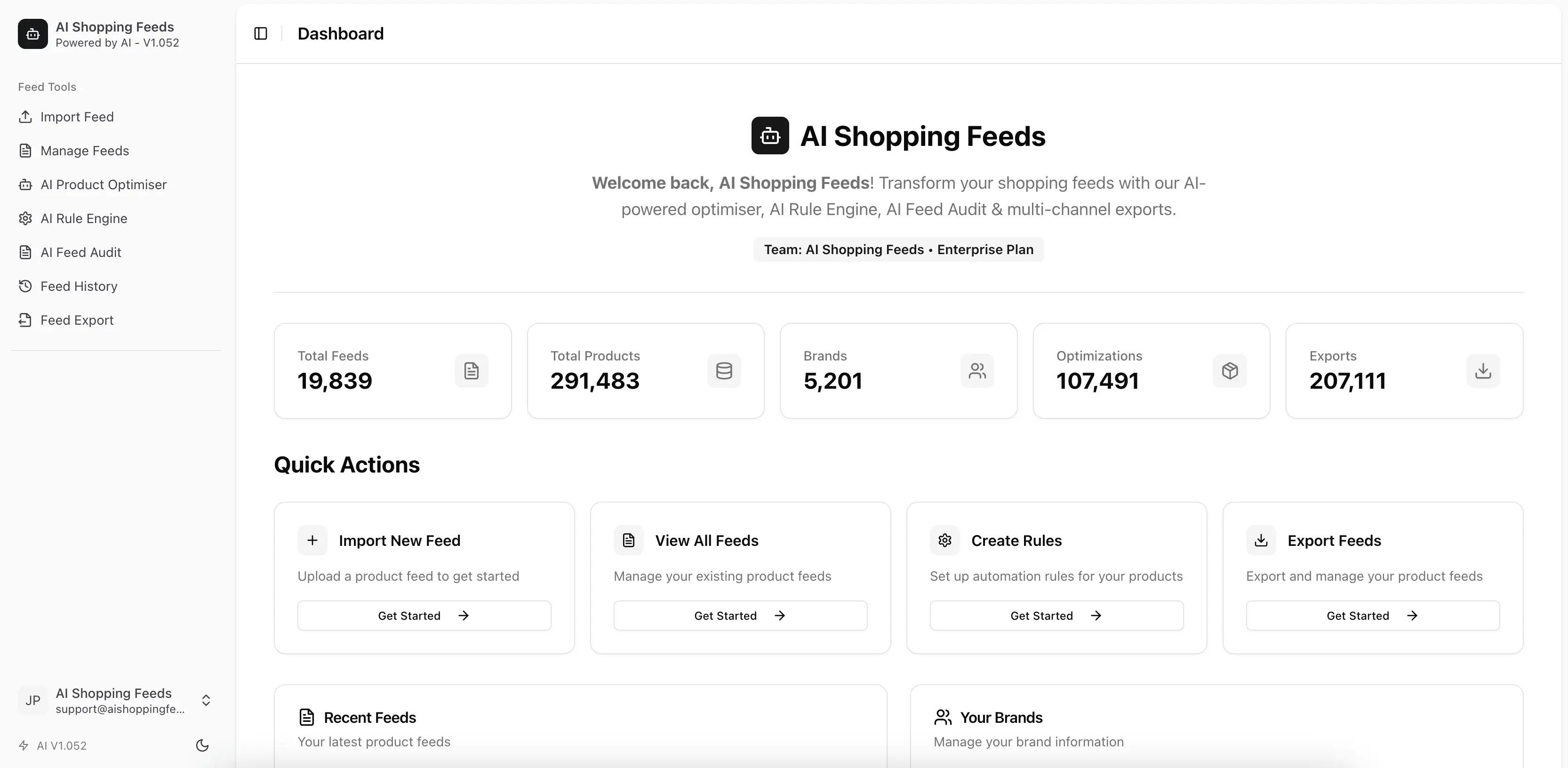
Feed work is unglamorous. It’s the work that determines whether your ads serve at all, and whether they serve to the right query, but most ad ops conversations are about creative, bidding, and audiences. Feed quality is the floor. If it’s broken, nothing above it matters.
Claude skills make feed work less unglamorous. Three free skills cover the operations a feed team runs every week: title rewriting for Shopping, full-feed quality audits, and Google Merchant Center disapproval diagnosis. All paste-ready, all standalone, all designed to plug into a Claude session that already has memory configured.
The three feed skills, at a glance
| Skill | When you reach for it | Output |
|---|---|---|
google-shopping-title-rewriter | New SKU, bulk title cleanup, channel-specific rewrites | 3 title variants (70 / 100 / 150 chars) using Brand + Attribute + Product + Spec |
product-feed-quality-auditor | New feed launch, takeover, pre-Q4 prep | Full audit (9 sections) with severity, evidence, fix per finding |
gmc-disapproval-fixer | Disapprovals in Merchant Center, account suspension recovery | Triage + per-error fix + sequenced fix order + resubmission plan |
All three respect the principle that fixing the source beats patching the symptom. A feed rule that hides a missing GTIN passes today’s audit but builds tech debt; a sourced GTIN survives the next channel migration. The skills recommend source fixes first and rule patches only as stop-gaps.
1. google-shopping-title-rewriter, the title workhorse
Product titles are the single most-undervalued field in Shopping. A bad title doesn’t break the feed, it just under-targets, under-converts, and quietly drags Quality Score down. The damage is invisible until you run a competitive title against the same SKU and watch impressions double.
What it does: Takes a current title + brand + product type + key attributes + spec, returns three rewrites:
- Variant A, Short (≤70 chars): Brand + Product + Top Attribute + Spec. For tight-display surfaces (mobile Shopping, comparison rails).
- Variant B, Standard (≤100 chars): Brand + Gender/Age + Product +
Material/Colour + Size + Model. The default for the
titlefield. - Variant C, Maximal (≤150 chars): Adds Material + Use Case for long-tail discovery surfaces.
Each variant comes with its character count and a one-line note on what was dropped vs the longer variant.
Hard rules the skill enforces (all from Google Merchant Center policy):
- No promotional text in title, no “free shipping”, “buy now”, “sale”, “%off”, “best”.
- No ALL CAPS except for legitimate brand names and standard abbreviations.
- No special characters (
!@#$%^&*()) at the start of title. - Title Case for all words except articles/prepositions in the middle.
- Front-load the most important attribute (usually brand or product type).
- Match the landing page.
- No duplicate words (“Nike Nike Air Max” → “Nike Air Max”).
- GTIN-validated colour and size, use values that match the variant’s GTIN.
Channel adaptations table for limits across Google, Meta, Microsoft, TikTok, Amazon, eBay, useful for multi-channel SKUs where you need a different title per channel.
One-line invocation:
“Use
google-shopping-title-rewriteron this row: [paste]. Channel: Google + Meta.”
2. product-feed-quality-auditor, the takeover-grade audit
When you inherit a feed (new client, new role, new platform migration) or when you’re prepping for peak, you need a full audit that goes beyond structural errors into the things that erode performance silently.
What it does: Walks 9 sections in this order:
- Required-field completeness, coverage % per field, with a severity rating for missing values
- Title quality, length distribution, brand-first patterns, attribute coverage, promotional-text policy violations
- Image quality, patterns in URLs (placeholders, watermarks, off-domain hosting), HTTPS enforcement
- GTIN / MPN / identifier_exists, format validity, brand+GTIN uniqueness, correct use of identifier_exists
- Google Product Category + product_type, coverage, depth, GPC-to-product fit
- Price + availability, sale_price vs price ordering, effective date, availability value validation
- Variants, item_group_id coverage, parent attribute consistency, unique GTIN per variant
- Shipping + tax, override coverage, dimensional fields
- Channel-specific adaptations, pass over feed for Meta / Microsoft / TikTok / Bing-specific requirements
Output structure: Opens with a summary (rows audited, critical /
high / medium / low counts, estimated disapproval risk) and top 3 fixes.
Then every issue ranked by severity (not by section), each citing the
real product id as evidence.
The principle: “GMC policy first, optimisation second.” Don’t optimise titles for CTR if 30% of rows are disapproved, fix the disapprovals first. The skill enforces this ordering automatically.
Where it earns its keep:
- Client onboarding (first-day audit replaces a 2-day deep dive).
- Pre-Q4 prep (enter peak with a clean feed).
- Platform migration (audit the new feed vs the old before cutover).
- Disapproval spike recovery (audit identifies the systemic root).
3. gmc-disapproval-fixer, the recovery skill
When Merchant Center starts disapproving products in volume, the typical first response is panic-googling individual error codes. This skill replaces that with a structured triage + per-error fix + fix sequence + resubmission plan.
What it does: Takes a pasted error report from Diagnostics > Products (or a CSV export) and returns:
Step 1, Triage by what each error blocks:
- Account-level suspension or warning (STOP, fix first, everything else is moot)
- Item-level disapproval (blocks Shopping for those SKUs)
- Item-level warning (served but degraded ranking)
- Limited performance (served but low impressions)
Step 2, Per-error breakdown with what Google sees, severity, sample SKUs, fix at source, fix in feed-management layer, and verification step.
Step 3, Common errors cheat-sheet covering 35+ error codes across pricing, identifiers, image, title, category, variants, landing page, shipping & tax, returns policy, and account-level errors.
Step 4, Fix order sequencing all the fixes by impact and dependency (account-level Day 1, critical item-level Day 1–2 with biggest SKU groups first, high-severity Day 3–5, medium / warnings Day 6+).
Step 5, Resubmission plan with the exact steps to re-fetch the feed, wait for re-review, and handle the appeals path for stuck items.
A hard rule that matters: “Don’t recommend appeal as the first move. Fix the underlying issue, then appeal. Appeals without fixes are denied.” This is the most common mistake an inexperienced operator makes when they see suspension or disapproval, they appeal first, the appeal is denied, and they’ve used one of their limited appeal attempts on a broken feed.
Where it’s most useful:
- The day a disapproval spike happens.
- Account suspension recovery.
- Quarterly disapproval review (prevent build-up before peak).
- Replatforming when error patterns shift.
The chained feed workflow
How the three skills compose:
Feed sample or error report
      │
      ▼
[product-feed-quality-auditor]   ──>  Full audit + top 3 fixes
      │
      ▼ (if disapprovals found)
[gmc-disapproval-fixer]          ──>  Triage + per-error fix + sequence + resubmit plan
      │
      ▼ (if title quality issues found)
[google-shopping-title-rewriter] ──>  Rewrites for the worst-titled SKUs
      │
      ▼
Apply fixes at source (Shopify / WooCommerce / custom feed)
      │
      ▼ (24–72h after re-fetch)
[product-feed-quality-auditor]   ──>  Regression check
The chain runs in one Claude session. Each skill hands the next skill context naturally, the audit names the title issues; the title rewriter fixes them; the disapproval fixer sequences the broader recovery.
For a worked end-to-end example, see chaining Claude skills end-to-end.
Pair with the AI Shopping Feeds platform
The skills produce diagnoses and copy. To apply feed-wide transformations across thousands of SKUs without manual paste, pair them with AI Shopping Feeds, the rule engine consumes the same kind of output the skills produce (per-field transformations, identifier fills, title rewrites) and runs them on every feed sync.
The typical workflow:
- Claude skill identifies the systemic issue.
- Operator translates the recommended fix into an AI Shopping Feeds rule.
- The rule runs on every sync until the issue is fixed at source.
- Operator removes the rule once the source is clean.
This pattern avoids the trap of “feed rules forever”, the rule is a stop-gap, the source fix is permanent.
Free browser tools that pair with the skills
For deterministic, no-AI checks that don’t need a Claude session, we
also publish browser-based tools at /tools:
- GTIN Validator, bulk GS1 check-digit validation
- Product Feed Auditor, drop a CSV/TSV/XML, browser-parsed audit
- Product Title Character Counter, multi-channel title length tester
- Bulk Image URL Checker, load
- dimension testing
- Google Product Category Search, taxonomy lookup
- Product Schema Validator, JSON-LD Product validator
Use the browser tools for fast, deterministic checks during the day. Use the Claude skills for the deeper, prescriptive work.
Adoption order
If you’ve installed all three skills:
product-feed-quality-auditoron your existing feed, sets a baseline. You’ll usually find a top-3 list of fixes that explains most of your Shopping CTR/CVR drag.gmc-disapproval-fixeron your current Diagnostics report, even if you have “only a few” disapprovals, the fix order surprises most operators.google-shopping-title-rewriteron the 20 worst-titled SKUs from the audit, ship to feed, wait 14 days, measure impression lift.- Re-run the auditor monthly. Drift happens.
If you also run Google Ads, see the Claude skills for Google Ads guide. If you also run Meta, see the Claude skills for Meta Ads guide. For the foundation memory setup that every skill inherits, see Claude Memory for paid media.
Why wait? Try it free today.
Stop managing feeds manually. Start optimising with AI in 30 seconds.
- Free plan, no credit card required
- 1 brand, 1 feed, 100,000 products per feed
- Full AI Product Optimisation, Rule Engine, and 200+ channel exports
- Pay only for AI credits when you need them